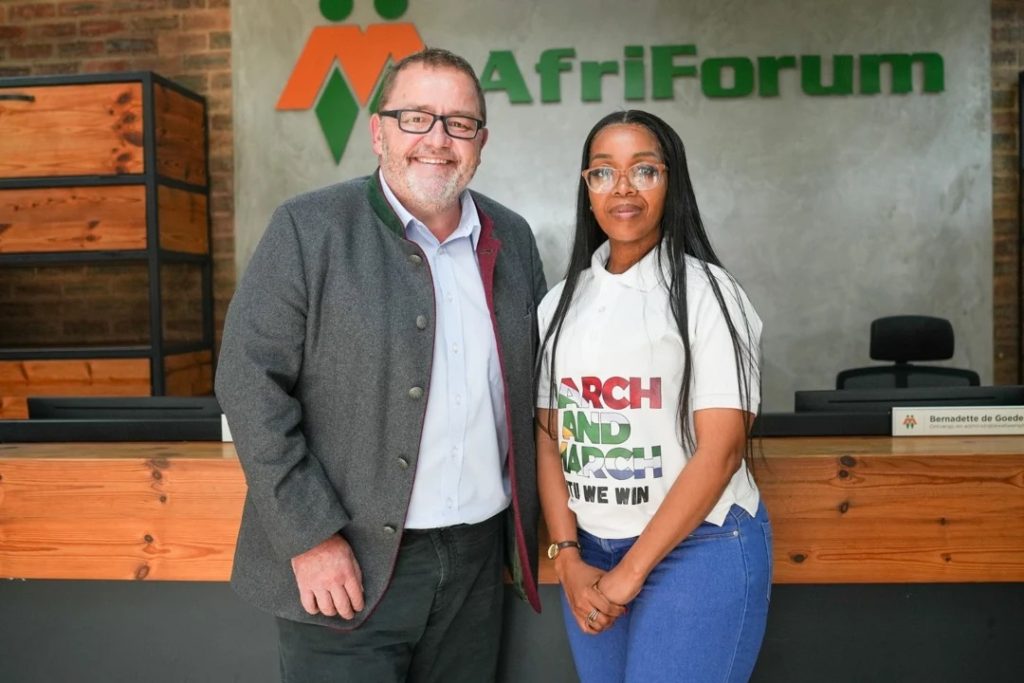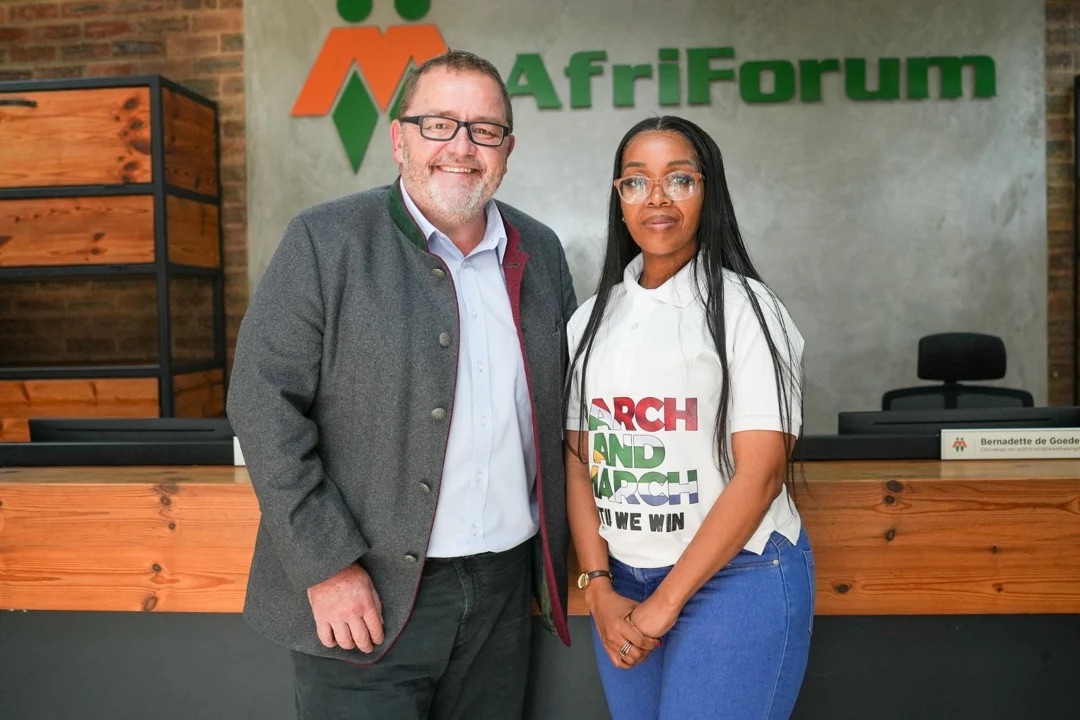
March and March and AfriForum have agreed to establish a collaborative working relationship focused on issues of mutual interest and improving communities at grassroots level.

The agreement follows a meeting on Tuesday between a March and March delegation led by founder Jacinta Ngobese-Zuma and AfriForum CEO Kallie Kriel and his delegation. The two organisations said their relationship would be based on mutual respect, while acknowledging that they do not agree on every issue.
According to the joint statement, the organisations identified several areas where they could work together, including community safety, education, skills development, cultural and heritage preservation, socioeconomic development and peaceful coexistence. They also agreed to cooperate on legal matters of mutual interest and support one another on issues relating to the rule of law and combating crime, including illegal migration.
March and March said the partnership would be focused on finding practical, community-based solutions rather than attempting to erase the differences between the two organisations.
Ngobese-Zuma said March and March believes communities should be empowered to work together, uphold the rule of law and hold government accountable. She also highlighted education as a cornerstone for South Africa’s future and raised concerns about crime, corruption, border security and illicit trade.
The organisations also discussed agricultural development, identity and heritage, education, training and skills development as areas in which communities could play a more constructive role.
‘We know there are things we disagree on’
Ngobese-Zuma acknowledged that the partnership does not mean March and March and AfriForum have reached agreement on all political or social issues.
She said a healthy relationship between the organisations must recognise that they share some interests while continuing to disagree on others. The two sides therefore agreed to “complement and challenge one another” while pursuing the broader objective of building a united South Africa that recognises its diversity.
Kriel similarly argued that differences should not prevent cooperation where common ground exists.
He said organisations can work together on issues where their interests overlap and argued that disagreements on particular matters should not stand in the way of initiatives that could benefit South African communities and children.
AfriForum also offered to share its experience of building a grassroots organisation over the past two decades. According to Kriel, the organisation is prepared to share both what has worked and what has not worked in its development.
Focus on communities
The meeting also examined what the organisations described as challenges arising from failures in border control, crime prevention and the public education system.
Rather than relying solely on government intervention, the two organisations discussed ways communities could organise themselves and identify lawful measures to improve safety and living conditions.
The collaboration comes shortly after March and March announced plans to develop community-focused structures modelled partly on organisations such as AfriForum. The movement has previously said it wants to become more involved in education, legal advocacy and community development.
The latest agreement does not represent a merger between the organisations. Instead, both sides have framed it as cooperation in areas where they share common interests, while retaining their separate identities and positions on issues where they disagree.
For March and March, the partnership could provide access to AfriForum’s experience in community organisation and legal advocacy. For AfriForum, it creates an opportunity to engage with a movement that has built a strong presence around issues affecting South African communities.
Both organisations say the cooperation will be conducted peacefully, within the law and with respect for their differences.