Prospective employees say they were told they would not be paid for three days of training and would only receive their October salaries at the end of November, raising concerns about whether job seekers can afford to take up the positions.
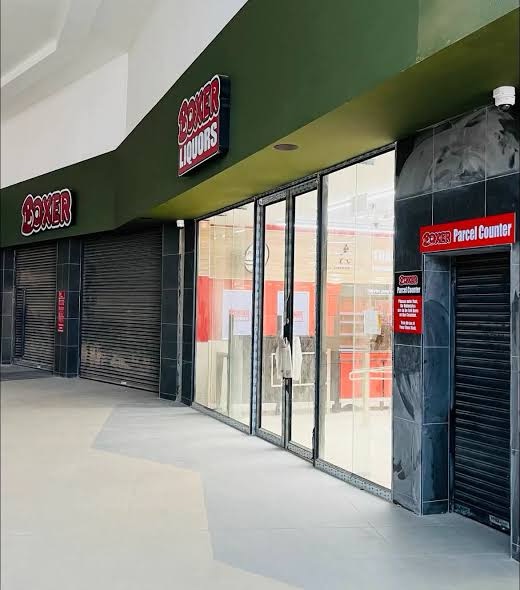
Boxer Superstores’ new store at Leratong City Mall is facing questions over its treatment of prospective employees ahead of its scheduled opening on 29 October 2026, after a trainee raised concerns about unpaid induction sessions and the company’s salary payment arrangements.
The trainee, who asked to remain anonymous for fear of possible repercussions, says several prospective employees questioned the arrangements after attending training between 6 and 8 October.
According to the trainee, the group was informed on the first day that Boxer paid employees in arrears, meaning they would only receive their October salaries at the end of November and their November salaries at the end of December.
The trainee says the arrangement raised immediate concerns about how they would cover transport, food and other essential expenses while preparing to start work.
For people entering the job market without a steady income, the prospect of working for several weeks before receiving their first salary could create a significant financial burden.
Trainees question unpaid training
The trainee provided a recruitment SMS instructing them to report to the new store on 6 October at 09:00 for a full day of training. The message also instructed attendees to wear black and white, bring writing materials and bring their own lunch.
According to the trainee, the group was subsequently informed that the training days would not be paid.
Concerned about the arrangement, the trainee contacted the regional trainer to ask for clarification on both the unpaid training and the proposed salary payment dates.
In the written exchange, the trainee questioned the basis for treating the sessions as unpaid, arguing that attendance had been requested by the company and that the recruitment message had not indicated that the training would be unpaid.
The trainee also raised concerns about the company’s proposed salary schedule and asked how it complied with South African labour legislation.
Boxer trainer says training was pre-employment induction
In her written response, the regional trainer, identified as Nonqola Shabalala, maintained that the training was unpaid because it was classified as induction or pre-employment training.
“The period attended was induction / pre-employment training. As such, there is no payment for this period. Certificates will be issued to all attendees for the training completed.”
Regarding salaries, Shabalala said the business employed almost 20,000 hourly paid employees who were paid in arrears.
She said the October salaries would be paid at the end of November in accordance with the company’s standard payroll cycle and that a separate arrangement could not be made for an individual employee.
The trainer further stated that the prospective employee was free to decline the offer if they could not accept the conditions.
When the trainee followed up by requesting the specific legal provisions, company policies or contractual terms supporting the arrangements, Shabalala maintained that her previous responses represented the company’s final position.
She advised the trainee to approach the Commission for Conciliation, Mediation and Arbitration (CCMA) or the Department of Employment and Labour for further assistance.
Questions about South African labour law
The dispute raises questions about the distinction between genuinely voluntary pre-employment orientation and training that forms part of taking up a job.
Under South Africa’s Basic Conditions of Employment Act (BCEA), section 32 regulates the payment of remuneration and generally requires employers to pay employees no later than seven days after the completion of the period for which the remuneration is payable. The wholesale and retail sector also has provisions addressing employees’ normal paydays.
The precise application of these requirements to the arrangement described by the trainee would depend on the actual employment relationship, the agreed remuneration period and the applicable terms.
The fact that a company describes sessions as pre-employment training does not, by itself, conclusively settle whether payment is legally due. The nature of the training, the circumstances under which it was undertaken and the applicable employment arrangements would need to be considered.
The trainee’s correspondence also raises a practical question: if employees are expected to report for work before receiving their first salaries, what arrangements, if any, are available to help them meet the costs of getting to work?
Some trainees reportedly reconsider their positions
The anonymous trainee says the combination of unpaid training and the proposed salary schedule led them and several others to reconsider continuing with the positions.
The trainee said they were willing to work but could not afford to finance transport and meals for an extended period without an income.
The correspondence also shows that the trainee explicitly asked the company to clarify the legal basis for its arrangements before deciding whether to continue.
The trainer’s response did not provide the specific statutory provisions requested. Instead, she reiterated the company’s position and referred the trainee to the relevant labour dispute-resolution and enforcement bodies.
Workplace expectations also raised concerns
Beyond the payment dispute, the trainee raised concerns about remarks allegedly made during training regarding transport and employees’ family responsibilities.
According to the account provided, the regional trainer told trainees that applicants were expected to come from nearby areas and questioned why transport costs were a concern, suggesting that some could walk to work.
The trainee also alleges that employees in certain departments, including sales, were expected to report as early as 05:00.
The trainer allegedly told trainees that they needed to choose between work and family matters, citing the demands of retail employment when it came to attending events such as funerals and weddings.
The trainee further alleges that DJ Zinhle was referenced during a discussion about people born in the 2000s being unemployable.
These claims have not been separately confirmed, and the written correspondence supplied by the trainee does not establish the context in which the remarks were allegedly made.
A new store and the promise of employment
Boxer Superstores Leratong City Mall is scheduled to open on 29 October 2026, bringing another major retailer to the new shopping centre.
The opening is expected to create employment opportunities for people in the surrounding community. However, the concerns raised by the trainee highlight the financial challenges that can arise when job seekers are expected to cover the costs of starting work before receiving their first salaries.
The dispute also leaves questions about the classification of the training sessions and the precise basis for the proposed payment schedule.
The trainee says they and several other prospective employees have decided not to continue under the arrangements described.
The central question is whether the company’s practices, as described by the trainee, comply with applicable labour legislation and whether prospective employees were given sufficient clarity about the financial implications before committing to the positions.