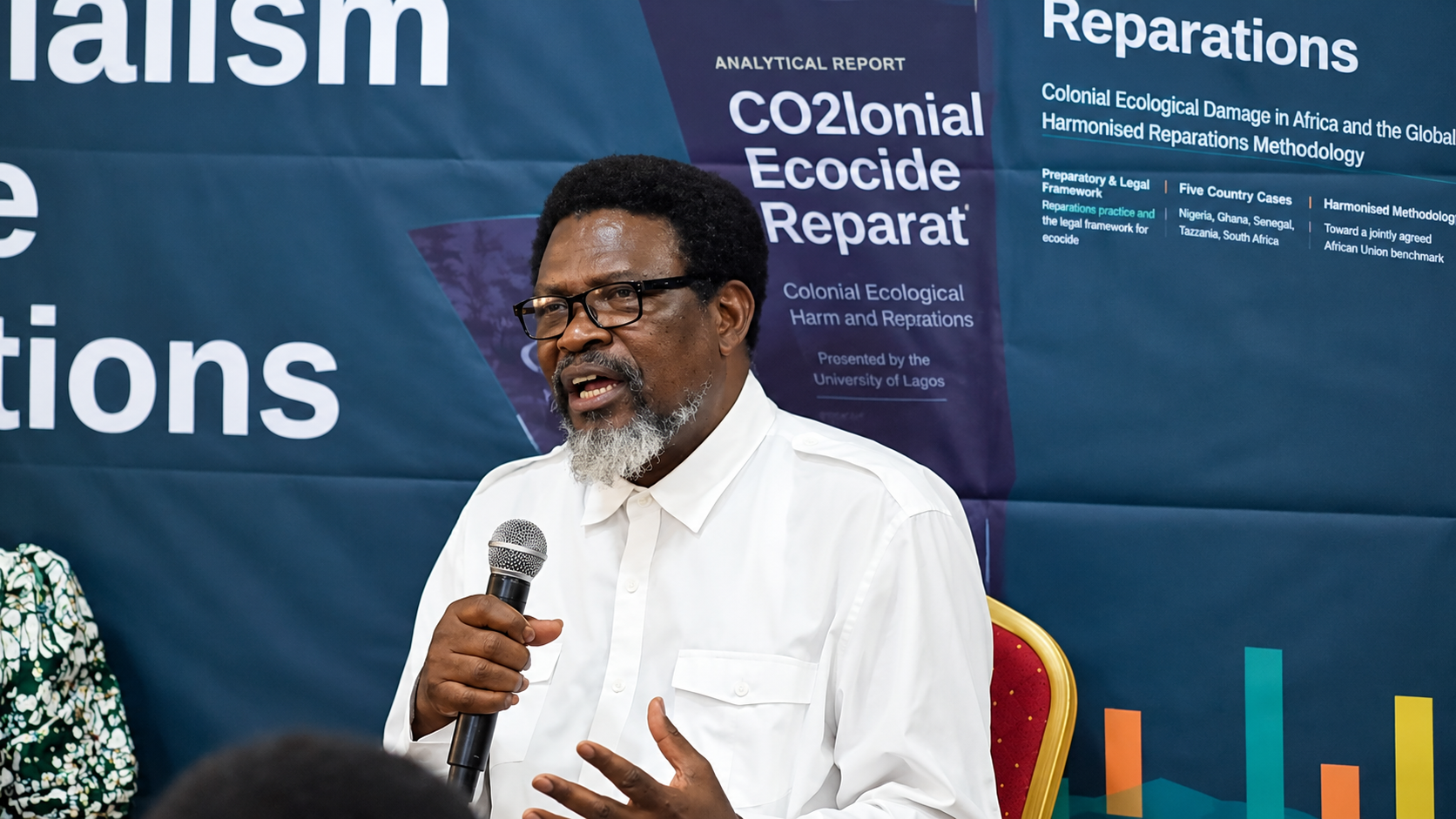
A new report presented at the University of Lagos in Nigeria has called for environmental destruction linked to British colonial rule to be recognised as a separate category in Africa’s reparations campaign, arguing that its potential financial value could reach hundreds of trillions of dollars.
Titled “CO2lonialism, Ecocide and Reparations”, the report examines the long-term environmental consequences of colonial policies across former African colonies, including land appropriation, natural resource extraction and the exploitation of energy resources.
Its authors argue that the ecological costs of colonialism have not received sufficient attention in existing reparations discussions and should be assessed alongside other forms of historical harm.
Presenting the report, lead author Professor J. G. Nkem Onyekpe said the environmental consequences of colonial extraction required a more rigorous assessment using historical records, scientific evidence and financial valuation.
Why the report raises the possibility of hundreds of trillions of dollars
Professor Onyekpe pointed to existing economic research that has attempted to quantify the value of resources transferred from the Global South through unequal exchange.
He cited a peer-reviewed 2022 estimate that valued resources appropriated from the Global South through unequal exchange at more than $10 trillion in 2015 alone.
Onyekpe argued that extending comparable calculations across the duration of colonial rule and the affected African countries could produce a figure running into hundreds of trillions of dollars.
However, the figure is a projection advanced in support of further assessment, not an established amount owed by Britain. Determining the value of any potential ecological reparations claim would require detailed research into the environmental damage, its historical causes and the appropriate methods of calculating losses.
The report calls for ecological damage to be examined as a distinct component of the broader reparations debate.
The legal question of Britain’s responsibility
The report also examines whether present-day governments can be held accountable for harm associated with colonial administrations that operated generations ago.
Speaking at the launch, Dr. Asikia Karibi-Whyte, an expert in jurisprudence and international law, challenged the argument that changes in government automatically remove a state’s responsibility for actions committed under previous administrations.
She argued that the United Kingdom continues to exist as a state under international law despite changes in its political leadership.
Karibi-Whyte also referred to the Certain Phosphate Lands in Nauru case before the International Court of Justice, in which Nauru pursued a claim against Australia concerning the rehabilitation of phosphate lands damaged by mining during the colonial period.
The case provides a relevant example of a former colonial territory seeking to address environmental damage associated with resource extraction. However, the legal merits of any proposed African claim would depend on its specific facts, applicable law and available evidence.
Nigeria’s colonial environmental legacy under scrutiny
The report also highlights the importance of examining colonial-era environmental changes through scientific research.
Professor Nnagugwu Oscar Uluocha, a Professor of Geography at the University of Lagos, described the ecological damage inflicted on Nigeria during British colonial rule as “colossal”.
He emphasised the need to investigate the consequences of colonial land-use practices, agricultural policies and resource extraction through environmental analysis and scientific evidence.
The authors argue that such research could help establish the extent of ecological damage associated with colonial economic systems and provide a stronger basis for assessing its long-term consequences.
Their proposed approach would expand the scope of reparations discussions beyond the direct appropriation of wealth and other historical injustices to include the environmental costs of colonial production and resource exploitation.
African-led approach to ecological reparations
The report comes amid wider efforts to strengthen Africa’s reparations agenda and growing international discussions about ecocide, a term used in debates concerning severe environmental destruction.
Its authors argue that the African Union’s work examining the classification of massive environmental destruction as a crime presents an opportunity to develop an African-led framework for ecological reparations.
Such an approach could bring together legal experts, historians, economists and environmental scientists to assess historical damage, establish common valuation methods and examine potential legal avenues for pursuing reparations.
The report does not suggest that environmental reparations should replace other demands for historical justice. Instead, it argues that ecological harm should be recognised as an additional category requiring dedicated research and assessment.
Whether the proposed valuation could reach hundreds of trillions of dollars remains to be established.
The report’s central argument is that the environmental consequences of colonialism should be examined systematically as African countries and institutions continue advancing the broader reparations campaign.