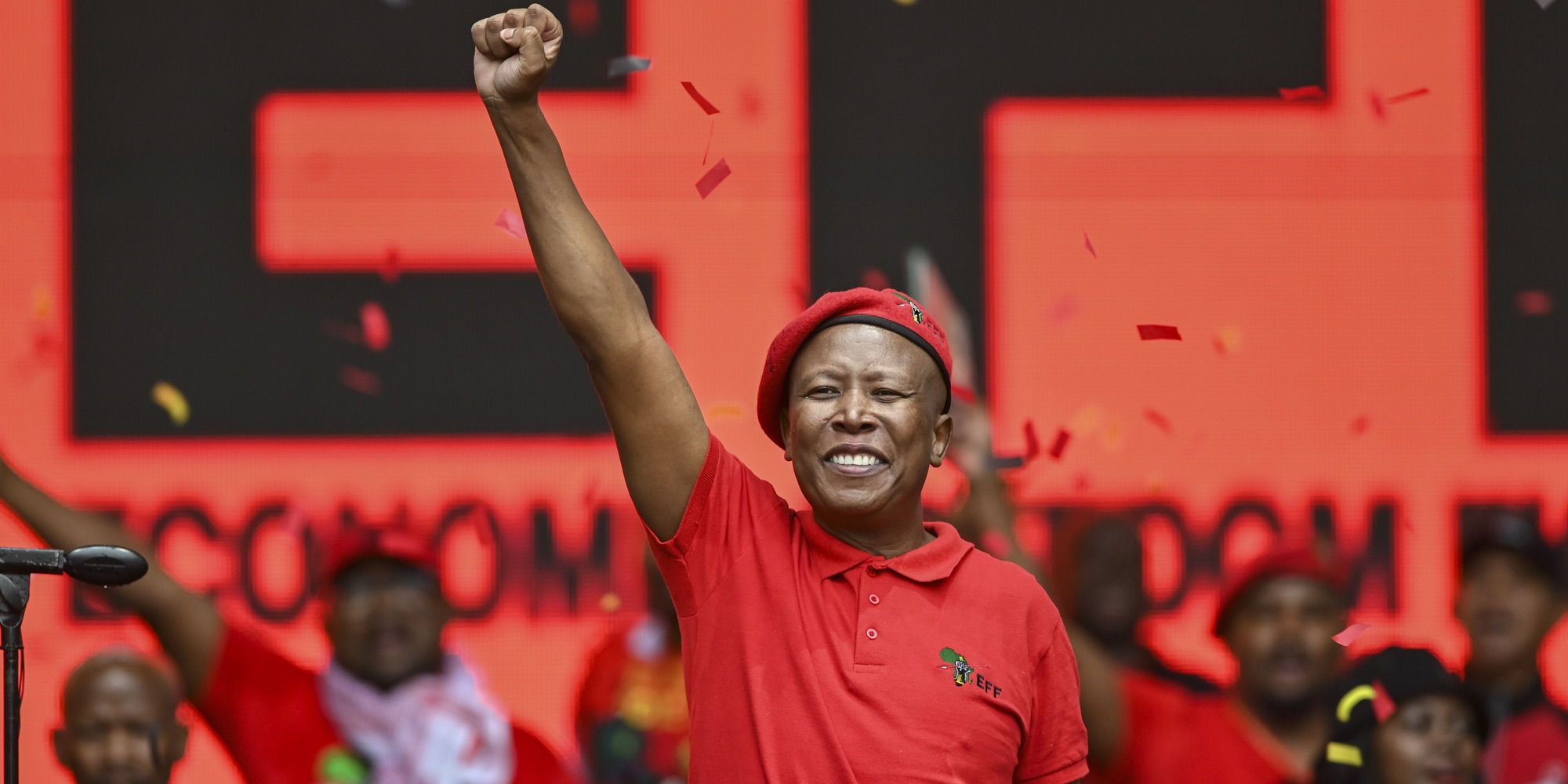
The EFF’s manifesto pledge to defend all immigrants in South Africa, documented or not, has exploded into a political fault line weeks before the 4 November 2026 local elections.
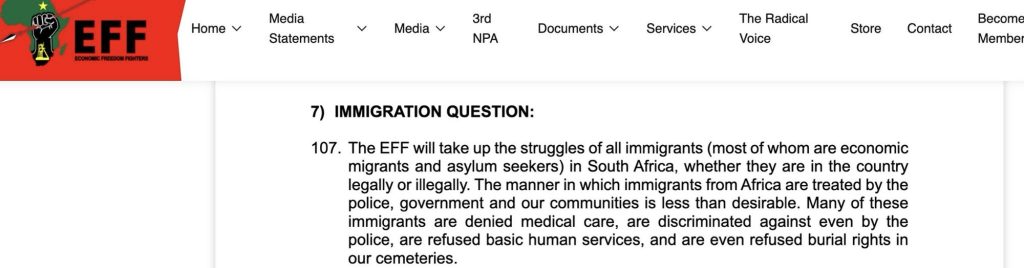
The party’s wording is blunt: it will “take up the struggles of all immigrants (most of whom are economic migrants and asylum seekers)… whether they are in the country legally or illegally.”
The manifesto condemns the treatment of African migrants by police, government, and communities, citing denied healthcare, discrimination, and refusal of burial rights.
That position hit the spotlight this week on Podcast and Chill when MacG admitted he didn’t expect the EFF to go that far.
Sol pressed him on what it means for a party already losing ground in parts of its Limpopo stronghold.
The timing couldn’t be worse for the EFF. Since late April, cities including Pretoria, Johannesburg, and Durban have seen coordinated protests against undocumented foreign nationals.
Led by March and March, Operation Dudula, and ActionSA, the demonstrations frame illegal immigration as the root of unemployment, crime, and collapsing public services.
In Jeppestown, foreign nationals reported being turned away from food parcel queues. In other areas, shops run by migrants closed preemptively.
The backlash is also hitting the EFF from within. A group of Limpopo members publicly defected to ActionSA, arguing that Malema’s Pan-Africanist rhetoric ignores the daily competition between South Africans and undocumented workers for jobs and resources.
Viral footage from Polokwane showed EFF supporters singing against Malema during a local meeting, a rare public rebuke of the party leader.
Other parties are taking the opposite tack. The IFP is proposing a six-month amnesty window to regularise some undocumented migrants who meet criteria, followed by orderly repatriation for those who don’t.
FF Plus is calling for strict border enforcement and the removal of illegal immigrants. Even the ANC and DA have hardened language around deportations in their campaign materials.
The stakes are high. Estimates put South Africa’s undocumented population between 3 and 5 million, with national unemployment stuck above 30%. A 2017 study found 56% of South Africans distrust African foreign nationals and 20% back removing all foreigners regardless of legal status. Those numbers help explain why the “South Africans first” narrative is gaining traction in peri-urban and rural areas where migrant traders are highly visible.
At a regional level, the fallout is spreading. Nigeria’s government is arranging voluntary repatriation for its citizens after reported xenophobic attacks, with President Tinubu citing safety concerns. Ghana has also summoned South Africa’s envoy.
For the EFF, the policy is rooted in human rights and African solidarity. For voters feeling economic pressure, it’s being read as tone-deaf. Whether that costs the party seats in November will be the first real test of how far public sentiment has shifted since the last election cycle.